Showing posts with label vegetarian. Show all posts

Saturday, August 7, 2010

Lemon Quinoa and Chickpea Salad


A couple people mentioned the lack of 2 Teaspooning in recent weeks. I promise, no one's missed any kitchen excitement, as I haven't really cooked anything since the sun came out in late June. I do not enjoy a warm oven or stove when the weather is warm.

But I do love quinoa and chickpeas, and both are great additions to salads. They're cheap. They're lovely at any temperature. They're light and don't overwhelm salads, like some other additions (cheese, meat). And along with the healthy fiber and protein in chickpeas, quinoa is a complete protein. I remember from a college Nutrition class that complete proteins are necessary for humans, but since they're primarily found in animal products, it's sort of lucky to find them in vegetarian/vegan foods. So there you have it. Eat more quinoa.

Both chickpeas and quinoa also have an impressive history: chickpeas have been eaten for at least 7,500 years, originally in the Middle East and Mediterranean. Quinoa is a South American food, eaten for 6,000+ years, and considered the sacred "Mother of All Grains" by the Incas.

If you don't know quinoa, it's similar to couscous: fluffy, light in flavor, quick-cooking. It's officially a "pseudocereal," not a real grain (couscous is officially a pasta). It can be red or yellowish -- red is prettier, but less common in stores. Quinoa is low-maintenance: add boiling water and cover for 15 minutes.

For this salad, I made my quinoa rissotto-style, adding a little water at a time and stirring, then adding a splash of lemon juice, salt and pepper, and sliced scallion at the end. I added canned chickpeas (rinsed and drained) in the last minute of cooking, to heat them. Then I tossed over mixed lettuce and herbs from the garden. Very little hot-stove time, and definitely better than a diet of popsicles.

Friday, April 9, 2010

Broccoli & Chickipea puree


I made hummus the other day, after blogging about the white bean spread, and will definitely try this Broccoli & Spinach puree from NYTimes.com next. I love the green, and this would be a nice way to use up an odd amount of leftover broccoli.

Saturday, April 3, 2010

Simple Bread Spreads: White Bean


I received this very As-Seen-On-TV spinning/pulling/chopping gadget for Christmas. While the device definitely does not chop neatly enough for most uses, I've discovered it minces like magic, and provides a 'rustic' (not entirely smooth) puree in moments.

So here's the first little dip I made recently: white bean with olive oil. It's super easy -- just don't get too laissez faire and or your liable to forget, for example, all of the parsley.

White Bean Dip with Parsley Oil (or just oil, in my case)
Food & Wine magazine

Ingredients
  • 1 C dried white beans (I used navy, which always confuse me because I expect them to be blue)
  • 4 garlic cloves, peeled
  • 1 thyme sprig
  • 1 bay leaf
  • 3/4 C extra-virgin olive oil
  • Salt and fresh pepper
  • 1 C flat-leaf parsley leaves
  • 1 C celery leaves
Cover the beans with 2 inches of water in a saucepan. Add garlic, thyme and bay. Bring to a boil, then simmering for about two hours, stirring occasionally and adding water to maintain level.

Drain, reserving 1/3 C of the cooking liquid. Remove herbs, and transfer beans, garlic, cooking liquid and 1/4 C of the olive oil to a food processor. Puree. Season with salt and pepper. Here's where I used the spinning/chopping gadget (officially the Chef'n VeggiChop). It worked perfectly, and was way less mess than the food processor.

Very finely mince the parsley and celery leaves, then add to the remaining olive oil. Season with salt and pepper. Transfer the white bean dip to a shallow bowl, and pour olive oil mixture on top. Or, if you have forgotten the entire part about parsley, just top with plain olive oil and season with extra salt and pepper.

Thursday, April 1, 2010

Reputation Redemption, In Cabbage Soup


Tudors, Kardashians. Of all the bad family reputations, those crucifers have the worst: always an outcast, rarely praised (despite being high in vitamin C and fiber). But while cabbage soup sounds like unpleasant peasant food, this is actually one of the few recipes I make repeatedly without trying to improve.

In the standard recipe from my trusty Bittman book, a little butter makes everything worthwhile. In the "Asian" variation (above, and below), soy sauce and ginger cloak the versatile vegetable in a totally different disguise.

Cabbage soup, Asian style
From How To Cook Everything

Ingredients
  • 1 head of cabbage, napa preferred
  • 3 T peanut or other vegetable oil
  • 1 large onion, sliced (I used a red onion)
  • 1 T minced ginger
  • 2 T soy sauce (plus extra, to taste)
  • 5 C stock (chicken, beef, or vegetable), warmed
  • Fresh lemon or lime juice, or white wine, or vinegar (whichever you prefer, for acid)
Core and shred cabbage. Heat oil in a large pan over medium, then pile in onion and cabbage. Cook until both are just slightly browned, roughly 20 minutes -- this seems like a very long time, but you want the cabbage super soft. Stir in ginger and cook for a few moments, then add soy sauce and stock. Once heated thoroughly, add 1 or more tablespoons of lemon juice (or alternative).

Wednesday, March 17, 2010

Butternut Pasta Sauce


In trying to eat a little less meat recently, I've leaned a bit too heavily on butter and carbs. This dish omits the former and gives you some flexibility with the latter: swap out boring white fettuccine for whole wheat, or use some type of filled pasta -- spinach could work well. And/or mix in some green vegetable (peas? asparagus?) for textural variety.

The sauce is super creamy, without needing an ounce of cream (I omitted from the original recipe). If you want to add some heavy cream, do so before adding the broth at the end.


Roasted Butternut Pasta Sauce

Ingredients
  • 1 medium butternut squash (about 1 1/2 pounds)
  • 1 T olive oil
  • 1/2 tsp dried rubbed sage
  • 5 cloves garlic, peeled
  • 1-2 C chicken or vegetable broth
  • 1 lb pasta (something to which sauce will cling)
Directions (in short: roast, puree, and add to pasta)

Preheat oven to 375. Peel, seed, and cube squash -- don't worry about appearances, just make everything equal sized for effective roasting.

Toss squash with olive oil and scatter with garlic on a rimmed baking sheet. Roast until very soft, ~40 minutes, stirring once or twice.

Puree in a food processor or blender. Add just enough chicken or vegetable broth to thin sauce to desired consistency. Season with salt and pepper. Serve with desired toppings, and serve with a little parmesan, sage, or crushed walnuts.

Saturday, March 13, 2010

Brunch with a flip: Crepes a la Florentine


For three months, I served crepes and wine at a cafe near my college apartment. I'd never even tasted a crepe when the retired-engineer-turned-restauranteur hired me, but the recipes were works-in-progress, so I ate crepes all summer: with asparagus and hollandaise, banana and nutella, flaming crepes suzette.

In the six years since, I never made them at home -- until today. With a recipe and a little inspiration from a recent class at Blue Ribbon Cooking, I prepared my mise en place forGateau de Crepes a la Florentine (roughly translated: giant saucy pan of crepes with spinach).

Despite initial fear, I've pretty much mastered the French flipping of a crepe: paper-thin disks fly from my frying pan, crisp at the edges, perfectly browned on one side. I flipped about 30 crepes today, and not one landed outside the pan. Yes, quite impressive, thanks.

Note: this is a long recipe with many steps, but it's not super tricky and can be assembled in advance then heated half an hour before serving.


Gateau de Crepes a la Florentine

Ingredients:
  • Batter for 24 crepes (must be made at least 2 hours in advance)
For the sauce mornay (bechamel with cheese):
  • 5 T flour
  • 4 T butter
  • 2¾ cups boiling milk
  • 1/2 tsp salt1/4 tsp pepper
  • Nutmeg, whole for grating
  • ¼ C heavy cream
  • 1 C coarsely grated cheese -- should be swiss, but I used an aged white cheddar
For the spinach filling (this is double the suggested amount of spinach, which seemed like barely a garnish in the dish):
  • 3 C wilted, chopped spinach (just wilt it in a medium-hot pan, no oil necessary)
  • 2-4 T of the mornay sauce above
  • Salt + pepper
For cheese and mushroom filling:
  • 1 C cream cheese
  • Salt and pepper
  • 1 egg
  • 1 C chopped mushrooms
  • 1 T minced green onion
  • 1 T butter
For finishing:
  • 2 T grated cheese
  • 1 T butter
Make the sauce mornay:
Melt butter, then add flour and whisk two minutes. Remove from heat, and beat in the hot milk, salt, pepper, and nutmeg. Boil, stirring, until slightly thick. Reduce heat and slowly stir in cream, then cheese. Remove from heat.

The spinach:
Mix wilted spinach with 2-4 T of the sauce mornay. Salt and pepper to taste.

The cheese and mushroom filling:
Saute mushrooms and green onions in butter. Beat cream cheese and egg in a bowl, then stir in mushrooms. Season.

Assemble:
Either make all your crepes in advance, or make them as you assemble the dish.

Line a lightly-buttered baking dish with crepes, overlapping just a bit and tearing them in half if they don't fit properly whole (no one will see what they look like, so just make it work). Then layer: first, a thin layer of spinach, then a thin layer of mushroom filling, then spread sauce mornay over it. Continue, with a layer of crepes, then spinach, then mushroom, then mornay. Finish with a layer of crepes, and cover with remaining sauce mornay. Sprinkle with remaining cheese, and dot with butter. Refrigerate until a half-hour before serving, or proceed directly with baking.

Bake:
Preheat oven to 375. Bake dish 25 to 30 minutes in upper third of oven. To serve, cut in pie-shaped wedges.

Thursday, March 11, 2010

Mac (or penne) + Cheese


I read a lot of recipes. A good one is almost narrative, with appealing characters, dramatic conflicts, and a satisfying resolution. On a rainy Thursday, I want a comfortable old book and unpretentious food.

Fortunately, fate (disguised as time-wasting at work) let me to this mac + cheese recipe on a friend's very-entertaining blog. Since it comes from New York, I'll pretend it's a bit sophisticated. (Er, wait, it's actually from The Pioneer Woman. Hm. I guess pioneers are chic in a bonnet-wearing way.)

I will definitely follow Kelsey's adaptations to use lots of mustard and pepper. And I'll probably use whole-wheat penne, since I have that at home. Usually I reserve my excitement for dinner until after lunch, but today I'm making an exception.

Sunday, February 14, 2010

Pasta with beets, greens, and goat cheese


So I had some beets, and I wanted some pasta.

Unfortunately, I found no beat sauces in my many cookbooks, and "beet pasta" search results returned recipes for creating pink noodles from scratch. While enticing, I rarely have motivation to use that Marcato pasta maker I received so many Christmases ago. My enthusiasm for kneading and flattening and cutting and drying does not match my enthusiasm for fresh, hand-made pink pasta.

But finally I found a couple recipes that outlined roasting beets, then cubing them and tossing into a little stock with garlic, and simmering down to saucy consistency. Steam or blanch a leafy green, like kale. Toss together your cooked pasta, kale, and sauce. Don't be skimpy with the sauce -- since it's quite thin, the pasta will absorb much of it. Reserve extra stock or pasta-cooking water to add if the final mixture is too dry. Sprinkle with goat cheese just before serving.


Monday, January 25, 2010

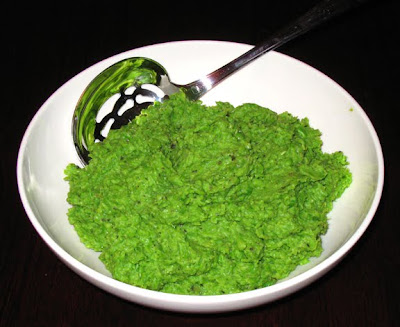
Herbed Mashed Peas for spring (and those impatient for it)


Surprise crocuses popped up in the garden, and my mom (a real gardener, while I'm just a person with a garden outside) confirmed that they're usually the earliest bloomers -- capable of breaking through snow.

If the flowers can forge ahead toward spring, so can I. In the absence of much good produce yet, I tried Herbed Mashed Peas, a bright green ode to the first inklings of springtime.

I've seen recipes for this a few places recently. Mint is the most common herb used, but seemed a bit too summery for January -- maybe I'll try in July. Most recommended serving with fish, but I had Mark Bittman's porkchops (I peppered heavily) in white wine.


Herbed Mashed Peas
You could probably figure this out based on the title alone, but here's an official recipe. :)
  • 20 oz frozen peas
  • 1 T butter
  • A generous amount of pea-compatible herbs. Try: 1/3 C fresh chopped mint, chives, or dill; 2 T chopped fresh basil + 1 T chopped fresh tarragon; or 1 T red pepper flakes + 1 tsp cumin + a couple roasted garlic cloves.
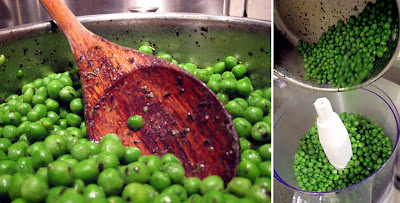
Melt butter in a large pan over medium. Add herbs, stirring till fragrant. Add peas, and stir gently until heated through (will take a few minutes, but do not overheat -- you want mashed peas, not mush). Puree in a food processor till coarsely mashed. Serve warm.

Monday, January 11, 2010

Crispy, buttery potatoes


All the work here is in slicing potatoes thinly -- an excellent exercise in knife skills, and a delightfully buttery side dish. Or, use a mandolin for more precise slices.

Crispy, buttery potatoes
  • 2 T butter
  • 2 T olive oil
  • 4-6 yukon gold potatoes, enough to fill your casserole dish
  • Salt, pepper
  • Thyme (dried or fresh)
  • 4-6 cloves of garlic
Preheat oven to 400. Slice potatoes into 1/4-inch-thick slices, keeping in order (this allows the most attractive presentation).

Melt butter. Add butter and oil to a 9-inch casserole dish. Arrange potatoes in dish. (I arranged them end-to-end in a circle around the dish, then put the smallest potatoes in the center.) Stuff garlic cloves into gaps between potatoes.

Bake for about 45 minutes. Sprinkle with thyme, salt and pepper, spoon some of the butter and oil over the top of potatoes, and bake for another half hour or so -- as long as the potatoes are cooked through, but don't burn, the timing is not particularly precise.

Thursday, January 7, 2010

Šopska Salata, salad of the Western Balkans


Some folks bring trinkets from far-away lands, littering the shelves of friends and family with exotic tchotchkes. Some send postcards. And some share food.

Matt is the last of these -- the best option, in my opinion. His holiday visit from Serbia brought chocolate filled with Pop Rocks and a bottle of Rakia ("potent" is an understatement. See Rakia in the glass in the photo above, courtesy SoSofia.com).

Also on the Serbian menu: Šopska Salata, a simple Balkan salad. From Matt:

"Šopska Salata, found on every dinner table across almost all areas of the Western Balkans
(for large salad):
  • Two tomatoes
  • Large cucumber
  • Green pepper or similar
  • Large Onion (add small hot pepper if you like)
  • Firm Feta cheese that you can grate (or substitute Greek Mizithra)
  • Oil (traditional: sunflower, lux: Extra Virgin)
  • Vinegar (traditional: something real simple, lux: Balsamic)
  • Salt, Pepper
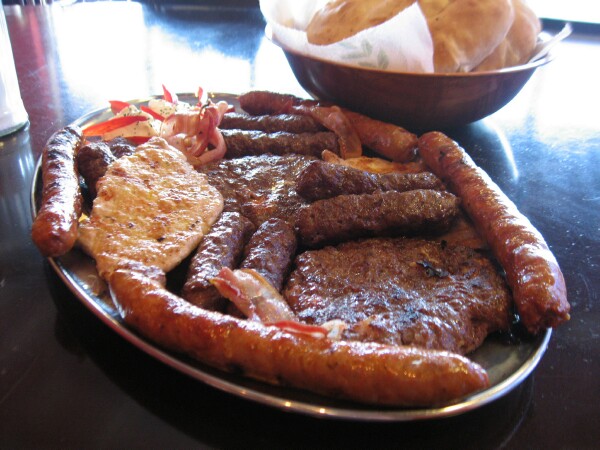
Peel and roughly chop/section all veggies and put in bowl, cover with shredded cheese, leaving it on top. Individually season with a spritz of oil and vinegar to taste, same with salt/pepper. Wash it down with copious amounts of Jelen Beer, and serve as a garnish to your giant pile of grilled mixed meat:"


If meat with a side of meat is not on your menu, this salad would be great with with grilled fish, fried chicken or barbecue.

Saturday, December 26, 2009

White vegetable lasagna

Brian asked when we might start eating solid foods again, and I realized my winter soup binge had gone on too long.

I also had a box of sweet potatoes leftover from Thanksgiving, and this recipe used them all -- a good thing, since sweet potatoes do not generally excite me and they may otherwise have sat in the corner of the kitchen until Easter. This vegetable lasagna used them well: the very
lengthy baking time made them sweet and soft, and the texture worked perfectly in lasagna.

So I've never made lasagna before, and I'm not quite sure this counts: no meat or tomato sauce means this does not have traditional lasagna flavor. But true to lasagna form, it has a long recipe with many layers. Don't be daunted -- there's nothing difficult. Just be generous with seasoning, spices and flavorful ingredients (garlic and onion), and make sure you have everything before you start.


White vegetable lasagna
(adapted from another blogger, who adapted it from Cooking Light. I un-lightened it a bit.)

Ingredients for white sauce:
  • 3 1/2 lbs sweet potatoes, peeled and sliced into ½ inch thick slices (I used the food processor -- messy looking slices, but it doesn't matter for this.)
  • Cooking spray
  • 2 cups milk
  • 1 shallot, coarsely chopped
  • 1/8 tsp ground nutmeg
  • 1/8 tsp ground cinnamon
  • 1 bay leaf
  • 2 1/2 T flour
  • 3/4 C grated Parmesan
Ingredients for the other layers:
  • 1 T olive oil
  • 2 cloves garlic, diced
  • 10oz fresh spinach
  • 10 oz ricotta cheese (I used about 2/3 of a 15oz package)
  • 2-3 oz fresh mozzarella, either purchased in pearl form or sliced very thin
  • 9 no-boil lasagna noodles
Roast the sweet potato slices. This can be done earlier in the day, or even a day ahead. Preheat oven to 450°. Spray 2 - 3 large baking sheets with cooking spray and spread sweet potato slices in a thin layer. Season generously. Roast 20 minutes, turn, and roast another 20 minutes or until tender (about 40 minutes total). Turn the oven down to 375° (for final baking of lasagna).

Make the white sauce. Combine onion, milk, nutmeg, cinnamon, and bay leaf in a medium sauce pan and heat on medium heat, stirring constantly. Bring to a simmer, then remove from heat and let the sauce stand 15 minutes (this is when the flavors of onion + bay leaf infuse into the milk). Strain out solids and discard, saving the milk mixture. Return milk to the pan and whisk in flour. Season with salt and pepper (about 1/2 tsp each). Cook over medium, whisking, until sauce is thick, about 5 - 8 minutes. Remove from heat and stir in Parmesan.

Saute the spinach (can be completed while milk is resting for 15 minutes). In large pan, saute the garlic briefly in olive oil over medium heat. When softened, add a large handful of spinach -- enough to fill the pan -- and a big sprinkle of salt. Turn the spinach with kitchen tongs as it wilts. If not all the spinach will fit in the pan at once, remove the first batch to a plate when wilted, and add the second half.

Assemble your lasagna in layers: sauce, pasta, sauce, spinach, sweet potatoes, ricotta, pasta, sauce, spinach, sweet potatoes, ricotta, pasta, sauce, mozzarella. All layers should be thin, but take care to spread the sauce sparingly. Spray the interior of a 9x13 baking dish with cooking spray. Spread a thin layer of sauce in the dish, and top with three lasagna noodles (overlapping slightly). Spread a thin layer of sauce on the noodles. Add a layer of spinach, then a layer of sweet potato, then a layer of ricotta -- you may need to crumble/smash the ricotta into bits and spread around, since it's not quite liquid enough to spread. Over ricotta, add a second layer of pasta, then sauce, then spinach, then sweet potatoes, then ricotta, then a final layers of pasta. Top it with the last layer of sauce, then spread your mozzarella over everything -- either dot the top with your pearls of mozzarella, or lay out very thin slices.

Spray a large piece of tinfoil with cooking spray, and tent over assembled dish. Bake at 375° for 30 minutes, then remove the foil and bake for another 20 minutes. Top should begin to brown just slightly. Let stand 10 minutes before serving.